
Top Mistakes in Artist Outreach and How to Fix Them
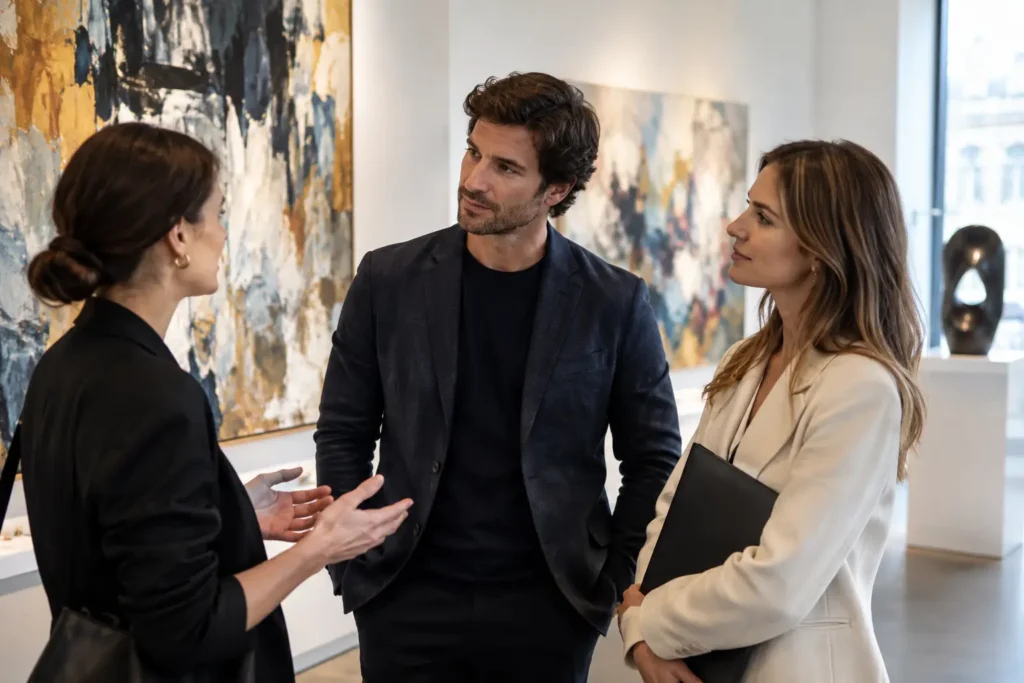
A thoughtful body of work can lose momentum before it is even reviewed. The top mistakes in artist outreach are rarely about talent alone. More often, they come from presenting work without enough clarity, sending it to the wrong context, or treating a potential gallery relationship as a quick transaction rather than the beginning of a professional conversation.
You want more than a name on a website. You want your work to be seen repeatedly, presented with care, and placed in a context that supports its next professional stage. That requires outreach that makes it easy for a gallery to understand not only what you make, but also where your practice is going and why a long-term relationship could be meaningful.
1. Sending the Same Message to Every Gallery
A broad outreach strategy can feel efficient, especially when you are balancing studio time, exhibitions, employment, and the daily work of sustaining a practice. Yet a generic message is easy to recognize. It often signals that the artist has not considered whether the gallery’s program, activity, or audience is relevant to the work.
Research does not require flattery or a long essay about the gallery. It means understanding the basic fit. Consider the artists a gallery presents, the media it works with, its international orientation, and whether its public activity reflects the kind of visibility you want for your career. A painter seeking a gallery with a strong commitment to international exhibitions and editorial presentation should communicate differently than an artist seeking a local, project-based space.
Your outreach should answer a simple question: why is this a credible professional conversation? One or two precise sentences can do more than a lengthy message copied into dozens of inboxes.
2. Making the Recipient Work Too Hard
A gallery should not have to search through a crowded folder, an unstructured social feed, or a collection of image files with unclear names to understand your practice. When the presentation is difficult to navigate, the work may never receive the attention it deserves.
Your materials should make an immediate, calm case for your work. Include a concise introduction, a focused selection of images, titles, dates, dimensions, media, and a clear way to view your portfolio. If you work across several bodies of work, organize them so the relationship between them is visible. The goal is not to show everything you have ever made. It is to show enough for someone to recognize quality, coherence, and direction.
This is one of the top mistakes in artist outreach because artists understandably want to prove range. Range can be valuable, but only when it is legible. Ten well-selected works from a coherent practice are usually more persuasive than fifty images that leave the viewer uncertain about your central concerns.
Edit for recognition, not volume
Ask yourself what a curator, director, or gallery team will remember after five minutes. Is there a visual language, material intelligence, or conceptual thread that remains clear? If the answer is uncertain, edit again.
That does not mean simplifying your practice to make it marketable. It means giving your work the structure necessary to be encountered on professional terms. Complexity deserves context. It should not be confused with disorder.
3. Writing an Artist Statement That Hides the Work
An artist statement can either orient the reader or create distance. Statements often become too abstract when artists try to sound authoritative. Dense theory, broad claims, and familiar phrases about emotion, identity, society, or transformation may be sincere, but they do little if they are not connected to the actual decisions visible in the work.
Write from the work outward. What materials, images, processes, subjects, or tensions recur? What questions keep returning in your studio? What does the viewer need to know in order to look more closely? Clear language is not a reduction of intellectual ambition. It is evidence that you understand your own practice well enough to position it.
A strong statement also leaves room for future development. Gallery representation is not simply about documenting what you have already done. It concerns the capacity of a practice to continue, deepen, and enter new contexts. Let your statement show both the foundation of your work and the direction you are actively pursuing.
4. Confusing Visibility With Professional Positioning
Posting regularly can create attention, but attention is not the same as sustained visibility. A single feature, a well-performing post, or an isolated exhibition may be encouraging, yet your career needs more than occasional exposure. It needs repeated opportunities for your work to be presented, documented, contextualized, and discovered.
This distinction matters in outreach. Do not frame your practice only through follower counts, isolated mentions, or general claims of online engagement. These details may have a place, but they do not replace a professional narrative. Focus instead on the development of your work, relevant exhibitions or publications, and the kind of context you are seeking next.
A gallery relationship can create a more complete professional structure when it connects presentation across exhibitions, art fairs, publishing, media, and digital discovery. The right fit depends on your practice and goals, but you should be clear about the difference between being listed and being actively represented.
5. Approaching Representation as a Request for Immediate Results
It is reasonable to want momentum. You have invested years in your studio, and you may be tired of relying entirely on self-promotion or waiting for the right person to notice your work. Still, outreach becomes less effective when it reads as a demand for immediate exhibitions, sales, or recognition.
Professional representation is a relationship built through mutual assessment. A gallery needs to see the quality and consistency of the work, but also your readiness for dialogue, preparation, and long-term development. You need to understand whether the gallery has a working structure that can support meaningful visibility for your practice.
This does not mean being passive. Be direct about your ambitions. If international positioning, stronger documentation, exhibitions, editorial visibility, or a more consistent professional framework matters to you, say so with confidence. The difference is that you are opening a conversation about shared direction, not asking for a promise no serious institution should make.
6. Reaching Out Before Your Materials Are Ready
There is a temptation to send an application as soon as a new body of work begins to feel promising. Sometimes that timing is appropriate. More often, a short period of preparation can substantially improve the first impression.
Before reaching out, review the practical details. Are your images high quality and accurately labeled? Is your biography current? Does your CV distinguish between solo exhibitions, group exhibitions, awards, residencies, and publications? Are the links or portfolio materials current and accessible? Do your materials show the same level of care as your studio practice?
Readiness is not perfection. Emerging artists do not need a long exhibition history to deserve serious consideration. What matters is whether the work is distinctive, whether the presentation is coherent, and whether you can show a real commitment to developing the practice. A concise, well-prepared application communicates this far more clearly than inflated language ever could.
7. Following Up Too Often, or Not at All
Silence can be difficult to interpret. A gallery may be reviewing submissions, preparing an exhibition, traveling, or considering how an artist’s work fits within its program. Repeated follow-ups within a short period rarely improve the situation. They can shift attention away from the work and toward pressure.
At the same time, a respectful follow-up is not inappropriate when enough time has passed and you have something useful to add. A significant new project, a recent exhibition, or a refined portfolio can provide a natural reason to reconnect. Keep the message brief, professional, and specific.
The larger point is to treat outreach as part of an ongoing professional practice. Continue making work. Improve your documentation. Build your ability to speak clearly about what you do. The strongest opportunities often emerge when an artist is prepared to be understood at the moment their work reaches the right context.
What Serious Outreach Looks Like
The most persuasive artist outreach is neither overly formal nor overly familiar. It is clear, selective, and grounded in the reality of your work. It shows that you are seeking more than a moment of attention. You are looking for a professional framework that can help your practice gain continuity, credibility, and international presence over time.
Parcus Gallery works with professional and emerging visual artists through selective applications and representation agreements, bringing together international exhibitions and art fairs, editorial publishing, digital visibility, media exposure, and artist discoverability across its wider ecosystem. For an artist who is ready to move beyond fragmented promotion, that kind of structure can be worth seeking out.
Your first message does not need to carry your entire career. It only needs to make the right next conversation possible: a clear introduction to work that is ready to be seen, understood, and taken seriously.
Artists with a focused portfolio, clear professional direction, and interest in sustained international representation may apply for representation at Parcus Gallery. Introduce the work concisely and make the next professional conversation easy to begin.