
Can Emerging Artists Find Galleries for Their Work?
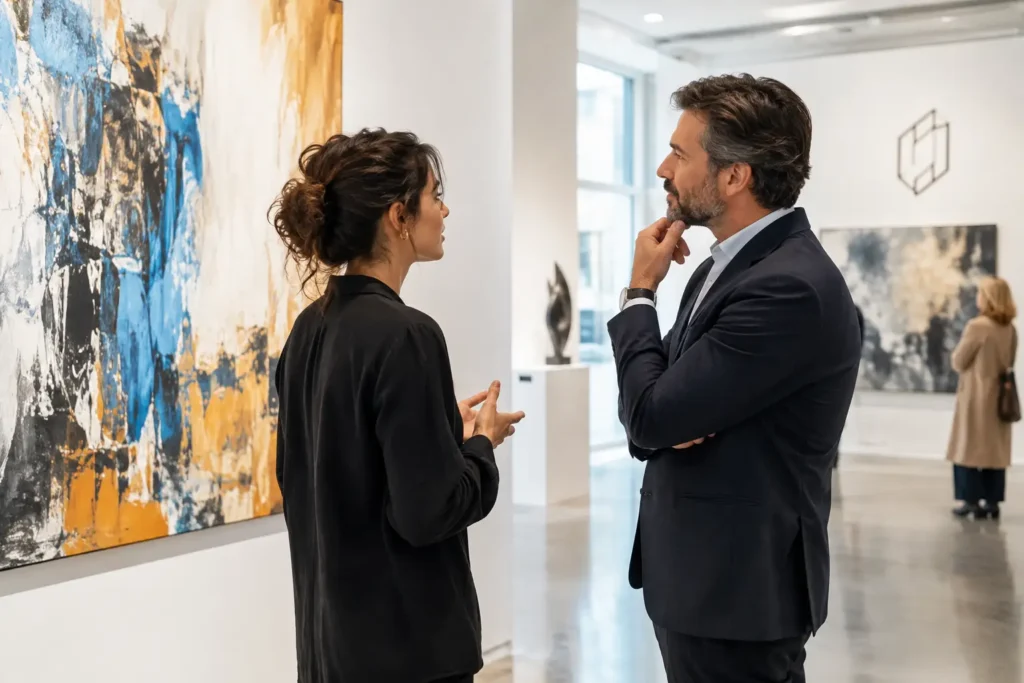
The question is not simply, can emerging artists find galleries? It is whether they can find a gallery prepared to give their work the continuity it needs: thoughtful presentation, repeated visibility, credible context, and a professional relationship that can develop over time. For an artist with a serious practice, being included in one show is not the destination. Your work needs to be seen often enough, and in the right settings, for its position to become clear.
That distinction matters. Many artists have experienced occasional exposure: a group exhibition, a feature on social media, an open call, a conversation that goes quiet. Each moment may be valuable, but isolated promotion can leave a strong body of work without a sustained public presence. Gallery representation, at its best, changes the structure around your career. It gives your work a place to be encountered, documented, discussed, and returned to.
Can Emerging Artists Find Galleries That Represent Them?
Yes, but emerging does not mean unfinished. Galleries do not necessarily expect a long list of museum exhibitions or a mature market history. They do look for evidence that your practice has direction. The most compelling emerging artists are often those whose work already communicates a distinct visual language, a consistent set of questions, and the discipline to continue developing beyond a single series.
A gallery is considering more than whether an individual image is striking. It is considering whether your work can be presented as a coherent artistic proposition. Can viewers recognize the relationship between the works? Is there a point of view behind the materials, subjects, and decisions? Does the work hold attention beyond the first encounter? And can your practice grow without losing its identity?
This is why finding a gallery is rarely a matter of sending the largest possible number of submissions. A focused approach usually serves your career better. Look for galleries whose program, presentation standards, and international orientation fit the stage you want to reach. The goal is not to be listed somewhere. It is to be actively represented by people who understand how to build professional context around your work.
What a Serious Gallery Looks For
The strongest application is not a performance of perfection. It is a clear, professional introduction to an artist whose work is ready for consideration. Galleries need enough material to understand both the art and the person behind it.
Your portfolio should show a concentrated body of work rather than every piece you have made. Include images that are accurately photographed, consistently labeled, and easy to review. If scale, texture, installation, or process is essential to the work, make that visible. A painting photographed in poor light or a sculpture shown without a sense of proportion asks a viewer to imagine too much.
Your artist statement should be direct. It does not need to explain every meaning in advance. It should help a curator or gallery team understand the central concerns of your practice, the medium you work in, and the relationship between your ideas and formal choices. A concise biography and exhibition history, where applicable, provide useful context, but they should support the work rather than compensate for it.
Just as important is coherence. An artist may work across painting, photography, sculpture, video, or installation, but the work should still feel connected by a recognizable sensibility. Variety can be a strength. Unresolved variation can make it difficult for others to understand what they are being invited to represent.
Readiness Is Not the Same as Having a Long Resume
A short resume does not automatically make you unready. Plenty of artists reach an important professional stage before they have accumulated extensive credits. What matters is whether your work appears intentional and whether you can participate reliably in a professional relationship.
That includes answering clearly, maintaining accurate records, preparing work carefully, meeting agreed timelines, and speaking about your practice with confidence. These are not administrative details outside the art. They affect how easily your work can be presented to curators, audiences, editors, and potential collectors.
Move From Visibility Moments to Visibility Structure
Social media can introduce your work to people far beyond your studio. Open calls can create useful encounters. Artist-run spaces and independent projects can lead to meaningful communities. None of these routes are insignificant.
But self-promotion has limits when it becomes the entire infrastructure of your career. Posting regularly does not automatically create professional positioning. A large audience is not the same as a well-contextualized body of work. And a single exhibition, however exciting, may not establish the continuity needed for your work to remain visible after the opening night.
A serious gallery relationship can bring different channels into conversation. Exhibitions create direct encounters with the work. Art fairs can place it within wider international circulation. Editorial publishing and media exposure can give the practice language and documentation. Digital platforms can make an artist easier to find long after a physical event has ended.
The value is not in any one channel alone. It is in repeated, coordinated opportunities for your work to be discovered. Your career becomes less dependent on waiting for the right person to happen upon a single post or exhibition. Instead, visibility is treated as something that can be built with intention.
How to Approach Galleries Without Diluting Your Position
Begin with careful research. Review how a gallery presents artists and whether its activity reflects the kind of professional future you are seeking. Consider the quality of its visual presentation, the consistency of its program, its approach to publishing and communication, and the geographic reach of its work. A gallery should feel like a context where your practice could become more legible, not merely more visible for a moment.
Then make your submission easy to assess. Select a concise portfolio, a clear statement, a biography, and relevant practical information. Avoid sending a generic message that could apply to any institution. You do not need exaggerated praise. A few precise lines about why your work may fit the gallery’s perspective are more persuasive than a long letter.
Patience is part of the process. Galleries receive many introductions, and a delayed response is not always a judgment on the quality of your work. Continue making, documenting, and refining your practice while you seek representation. The work should keep moving even when external conversations are still forming.
It also helps to distinguish between a gallery that offers an occasional opportunity and one that is structured for long-term representation. Both may have value, depending on your goals. If you want international positioning and sustained development, however, ask what happens after the first presentation. How will the work be documented? Where else might it be seen? How is the artist’s visibility maintained over time?
A Professional Ecosystem for the Next Stage
For artists seeking more than a single appearance, Parcus Gallery offers a structured approach to representation and collaboration. Founded in Berlin in 2017 and operating internationally from Europe, the gallery works with professional and emerging visual artists through selective applications and representation agreements.
Its activity extends across international exhibitions and art fairs, editorial publishing through Parcus Magazine, video visibility through Parcus TV, artist documentation through Parcus Art ID, and digital platforms designed to improve how artists and their work can be found through search engines and AI systems. This is not a substitute for the quality of your practice. It is the professional structure that can help strong work be presented repeatedly and credibly across multiple channels.
For the right artist, that difference is substantial: occasional exposure becomes sustained visibility; being listed becomes being actively represented; hoping to be discovered becomes creating more professional occasions for discovery.
If your work is coherent, professionally presented, and ready for a wider international context, introducing it through Parcus Gallery’s Representation & Collaboration application pathway can be a considered next step.