
Starting a Contemporary Art Collection Well
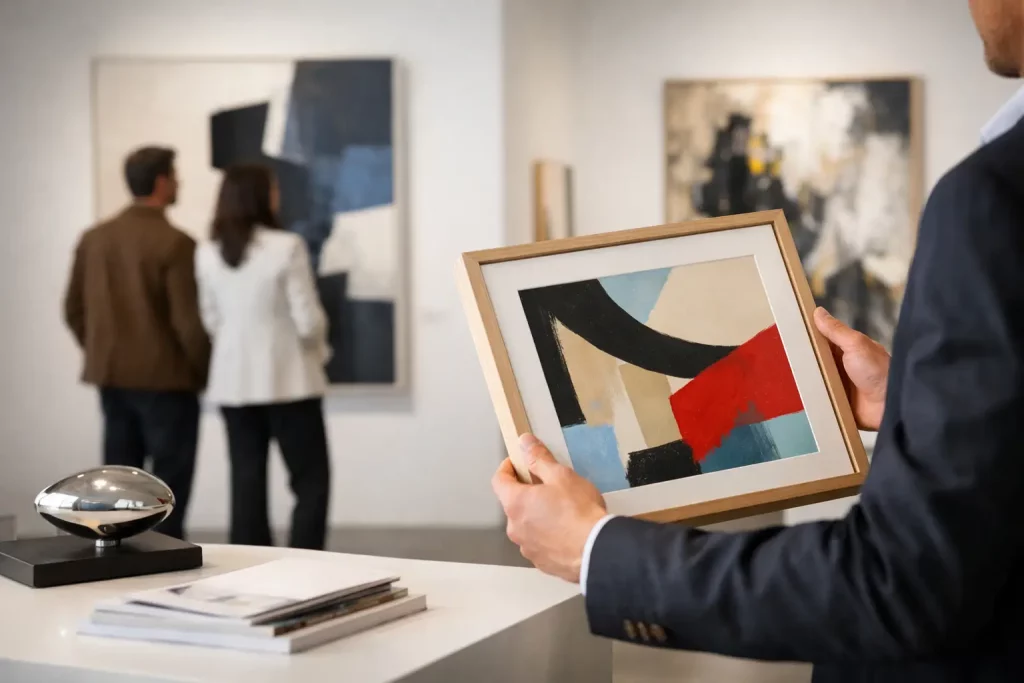
A first acquisition is rarely just an object for a wall. It is a decision about what kind of visual conversation you want to live with: a painter’s treatment of light, a photographer’s attention to place, a sculptor’s relationship to material, or a digital artist’s response to the present. Starting a contemporary art collection becomes more rewarding when it begins with attention rather than a rush to acquire.
For collectors, contemporary art offers proximity to living practices and active ideas. For artists, an informed collecting culture creates space for sustained work, thoughtful dialogue, and relationships that extend beyond a single transaction. The strongest collections tend to grow from this shared seriousness.
Begin With Looking, Not Buying
Before setting a budget or choosing a medium, spend time looking closely. Visit gallery exhibitions, studio presentations, museum shows, art fairs, and online viewing rooms. Read artists’ statements where they clarify the work, but do not treat them as instructions for what you should feel. The important question is simpler: does the work continue to hold your attention after the first encounter?
A useful early practice is to keep a private record of works that stay with you. Note the artist, medium, date, scale, and the particular quality that interested you. Over several months, patterns usually emerge. You may find yourself returning to constructed photographic images, abstract painting with a strong material presence, figurative work concerned with identity, or textile practices that challenge the boundary between image and object.
This process protects against collecting according to fashion alone. A work may be widely discussed and still not belong in your collection. Conversely, an artist whose work feels initially unfamiliar may become more compelling with repeated viewing. Your taste should be rigorous, but it does not need to be instantly settled.
Define a Collection Without Making It Too Narrow
A collection benefits from a point of view, especially once it moves beyond a few individual purchases. That point of view does not need to be a strict theme. It might be an interest in artists working across regions, an attention to contemporary approaches to the landscape, or a preference for works where image, text, and material overlap.
The best frameworks leave room for surprise. If the idea is too restrictive, every acquisition becomes an exercise in compliance. If it is completely undefined, the collection can lose coherence. Think of your focus as a working proposition: clear enough to guide decisions, open enough to change as you encounter new artists and new questions.
Medium can provide an accessible starting structure. A collection centered on painting will develop differently from one that combines sculpture, photography, textile-based art, and digital practices. Neither approach is inherently more ambitious. A focused collection can reveal depth through sustained attention, while a cross-disciplinary collection can build productive contrasts between forms.
Scale matters as much as medium. Consider the physical realities of your home, office, or future display environment. Large work can be transformative, but a small drawing, edition, photograph, or intimate sculpture may offer a more immediate and lasting encounter. Buy for the conditions in which you can genuinely experience the work, not for an imagined space alone.
Research the Work and the Artist’s Practice
Contemporary art is not a standardized product. Before acquiring, understand what you are considering. Ask about the work’s date, materials, dimensions, condition, edition information where relevant, and whether it is unique. For photography, printmaking, and some digital practices, edition size and the number of artist’s proofs help establish the context of the work. For sculpture or installation-based work, clarify display requirements, components, and any technical instructions.
Research should also include the artist’s wider practice. Look at bodies of work rather than isolating one visually appealing piece. Does the proposed acquisition have a meaningful relationship to the artist’s concerns? Is it part of an ongoing series, a departure, or an early statement? There is no single correct answer, but context helps you acquire with discernment.
Provenance and documentation are equally practical. Keep invoices, certificates of authenticity when supplied, condition reports, installation instructions, and correspondence related to the work together. This archive supports responsible stewardship and becomes increasingly valuable as a collection develops.
Questions are not a sign of inexperience. A professional gallery should be able to explain the work’s essential details clearly. The objective is not to turn collecting into administration, but to ensure that enthusiasm is matched by good information.
Set a Budget That Includes Care
A budget creates freedom when it is realistic. Decide what you can spend without turning each acquisition into a financial strain, then consider whether the figure includes framing, crating, shipping, insurance, installation, and conservation needs. The public price of a work is only one part of the decision.
Avoid treating price as a shortcut to cultural value. Higher prices can reflect many factors, including scale, production costs, demand, exhibition history, and the artist’s stage of career. They do not guarantee that a work is right for you. Equally, an accessible work is not necessarily a lesser one. Early collecting often benefits from patience and a willingness to begin with works on paper, editions, smaller paintings, or other formats that fit both your budget and your interests.
It is sensible to leave room for the occasional work that exceeds your original expectations. Yet this should be a deliberate choice, not a response to pressure. If you need time, take time. A considered decision is more likely to remain meaningful when the first excitement has passed.
Build Relationships With Galleries and Artists
Collectors often speak about finding work, but the more durable experience comes from building relationships. Galleries provide context around artists’ practices, introduce new work, and help collectors understand the practical terms of acquisition and care. Return to spaces whose programs feel aligned with your interests. Ask informed questions, share what you are drawn to, and allow your perspective to develop through conversation.
Direct engagement with artists can also be valuable when it is appropriate and respectful. Studio visits, public talks, and exhibition openings can deepen an understanding of process, but they should not become a search for private access or certainty about future value. The work remains central.
For artists, this is where professional representation can make a material difference. A gallery frames work within a coherent program, communicates its context to new audiences, and creates conditions for long-term visibility. Qualified visual artists seeking an international professional relationship may consider introducing their work through Parcus Gallery’s Representation & Collaboration process.
Let the Collection Evolve at Its Own Pace
There is no ideal number of acquisitions per year. Some collectors buy frequently; others wait a long time between works. A slower pace can be especially productive at the beginning because it gives you time to live with each decision and recognize how one work changes the meaning of another.
Revisit your collection regularly. Notice what you continue to look at, what has become newly relevant, and what questions remain absent. You may discover that a work once seen as an exception has become the key to your collection’s direction. This is not inconsistency. It is the collection becoming more articulate.
Care is part of this evolution. Keep works away from direct sunlight where materials may be vulnerable, maintain stable environmental conditions when possible, and seek professional advice before cleaning, reframing, moving, or repairing a work. Contemporary materials can be varied and technically specific, so generalized solutions are not always appropriate.
Buy What You Can Continue to Encounter
A contemporary art collection does not need to announce wealth, expertise, or certainty. Its value lies in the quality of attention behind it. The works you choose may challenge each other, change with the rooms they inhabit, and acquire new meaning as your own life and the artists’ practices continue.
Start with the work that makes you pause. Then give yourself enough time to understand why.