
Primary Art Market: What Artists Need From It
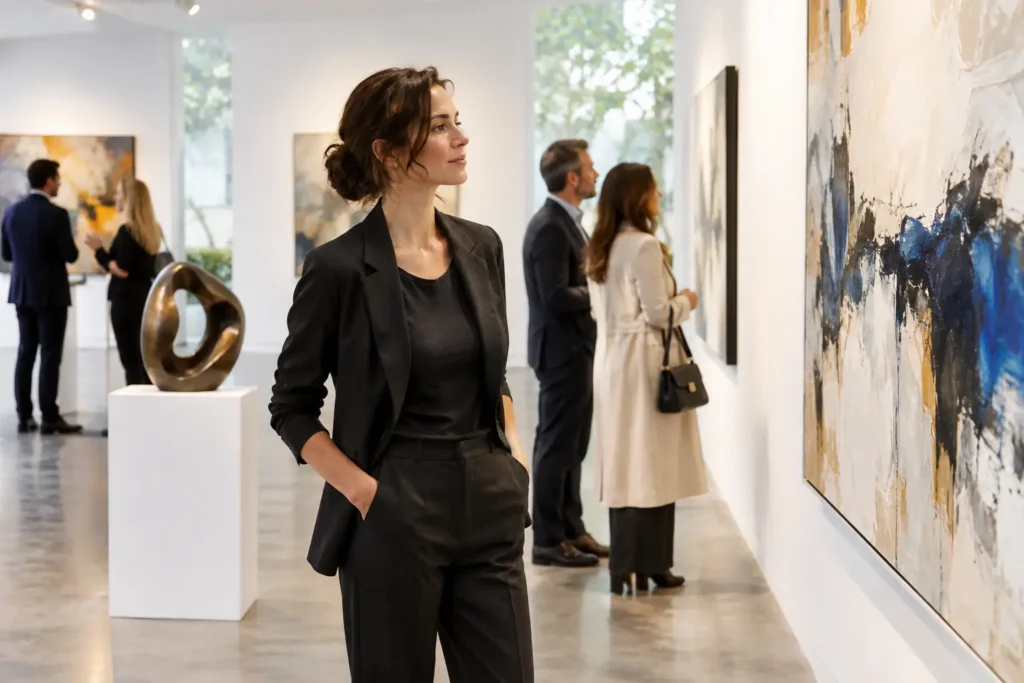
The primary art market is where an artist’s professional position begins to take shape in public. It is not simply a place where work is offered for sale. For an artist with a coherent practice, it is where the work can be introduced, contextualized, documented, and encountered repeatedly by new audiences over time.
That distinction matters when you are looking for representation. You may already have a strong body of work, a clear visual language, and the discipline to keep developing it. Yet professional momentum rarely comes from making good work alone. Your work also needs a structure around it: considered presentation, credible context, recurring visibility, and people who understand how to create opportunities for it to be discovered.
What the Primary Art Market Actually Means
The primary art market concerns the first sale and first professional circulation of artworks. It is the part of the art world in which artists, galleries, and other authorized representatives introduce new work directly into the market. The artist’s practice is active, developing, and positioned through exhibitions, publications, fairs, studio narratives, and professional relationships.
This differs from the secondary market, where artworks that have already entered circulation are resold. Both markets matter to the wider art economy, but they serve different purposes. The primary market is closely connected to the living artist’s current practice, reputation, and long-term trajectory.
For you, this means that representation should involve more than having your name included on a roster. A listing confirms association. Active representation creates a continuing professional framework in which your work can be presented with intention, placed in context, and brought back into view as your practice evolves.
Why Visibility Must Be Repeated
A single exhibition can be meaningful. A feature, a fair presentation, or a well-made artist profile can also create an important introduction. But isolated exposure is not the same as sustained visibility.
The people who may respond to your work do not all arrive at the same moment. Curators, collectors, writers, institutions, and fellow professionals encounter artists through different routes and on different timelines. Someone may see an image of your work, encounter it later in an exhibition context, recognize your name in a publication, and only then begin to understand the seriousness of your practice.
This is why a gallery relationship should support continuity. Your work needs more than a brief appearance followed by silence. It needs a credible rhythm of presentation that gives others enough opportunities to see its depth, identify its direction, and remember it.
There is a practical dimension as well. Digital visibility has become part of professional visibility, but posting work online is not a complete strategy. Social platforms can be useful for communication, yet they are fast-moving, fragmented, and dependent on attention that disappears quickly. Your career deserves a more durable record: clear documentation, considered editorial context, searchable information, and presentation across channels that reinforce one another.
What Artists Should Look for in Representation
The right question is not only, Can a gallery show my work? It is, Can this gallery help establish the conditions in which my work can be seen, understood, and followed over time?
A serious structure recognizes that each part of an artist’s public presence affects the others. An exhibition gives the work physical presence. An art fair can place it in an international professional environment. Editorial publishing can articulate ideas that cannot be carried by an image alone. Media exposure can extend recognition beyond a single room. A well-organized digital presence can make the artist easier to find after the event has ended.
None of these elements guarantees a particular result. Art careers are not linear, and no responsible gallery can promise sales, press coverage, or institutional attention. The value lies in building conditions for possibility rather than leaving your progress to chance. It means moving from waiting to be discovered toward creating repeated opportunities to be discovered.
Representation also requires discernment. Not every opportunity fits every practice, and not every artist needs the same pace or type of presentation. An artist working in painting may need a different context from an artist whose work centers on sculpture, photography, installation, or digital media. The strongest professional relationships are attentive to the work itself rather than forcing it into a generic promotional pattern.
Professional Presentation Is Part of the Work’s Reception
The quality of your presentation affects how readily others can engage with your work. This does not mean reducing art to marketing. It means respecting the fact that a serious practice needs accurate images, precise information, coherent texts, and a consistent public record.
When your work is presented carefully, viewers can move beyond a first impression. They can understand the medium, follow the development of a series, locate the work within your broader practice, and recognize that the artist behind it is committed to a sustained direction.
That clarity is especially valuable for emerging artists. You do not need to imitate an established career in order to be taken seriously. You do need to communicate that your practice has focus, authorship, and room to develop. A gallery can help create that professional frame, but the foundation remains your work and your readiness to build with purpose.
International Positioning Is More Than Geography
Many artists want their work to travel beyond their immediate city or national scene. That ambition is reasonable, but international positioning is not achieved by attaching the word international to a biography. It develops when your work enters real conversations across borders and can be encountered in different professional contexts.
This requires translation in the broadest sense. Your work should remain specific to you while being legible to audiences who do not share your local references, language, or network. A capable gallery helps make that encounter possible through clear communication, thoughtful framing, and sustained outreach across its professional ecosystem.
International activity also benefits from consistency. A one-time appearance in another location may be valuable, but it does not automatically create a durable presence. What matters is whether your work continues to be discoverable and whether each presentation contributes to a broader, recognizable professional identity.
The Value of a Connected Gallery Ecosystem
For artists seeking a more active form of representation, a gallery’s infrastructure deserves close attention. The question is not whether it has one channel of visibility, but whether its channels work together.
Parcus Gallery operates internationally from Europe and approaches representation as a connected professional ecosystem. Its activity combines artist representation with exhibitions, art fairs, editorial publishing through Parcus Magazine, video visibility through Parcus TV, artist identification through Parcus Art ID, and digital tools designed to improve discoverability through search engines and AI systems.
For an artist, the relevance is not the number of channels by itself. It is the possibility of a more complete professional presence. A work can be exhibited, documented, discussed, and made easier to find through multiple points of contact. Rather than relying on isolated promotion, the artist’s practice can be supported by a structure designed for continuity.
This kind of approach also respects the reality that careers develop through accumulation. A strong exhibition history, well-maintained documentation, thoughtful publishing, and recurring international presentation do not replace artistic substance. They help substance become visible to the people who may be ready to engage with it.
Preparing for Your Next Professional Stage
Before approaching a gallery, take an honest view of what you are asking it to represent. Is your current body of work coherent? Do your images accurately reflect the quality of the work? Can you describe your practice clearly without overexplaining it? Are you prepared to participate in a long-term professional relationship rather than seeking a single immediate outcome?
The strongest applications do not need exaggerated claims. They make it easy to see the work, its direction, and the artist’s seriousness. They show that you understand representation as a collaboration built around artistic development, professional standards, and a shared commitment to visibility.
Your work may be ready for more than occasional exposure. The next step is finding a gallery structure that sees representation not as a passive association, but as the steady work of giving your practice the context, continuity, and international presence it has earned.